
Pakistani women, once relegated to the background of the gun discussion, are today redefining the narrative. The picture of a woman holding a gun in Pakistan still frightens many and evokes assumptions, fear, and most importantly, myths rooted in entrenched cultural bias. But reality? That’s changing. Slowly, surely, and increasingly.
This is not about glorifying violence. It’s about agency, security, and taking back space in a domain that’s long been dominated by men. Let’s journey into the underground world of women and firearms in Pakistan, one where stigma clashes with need, and tradition meets change.
Within the traditional Pakistani rhetoric of an earlier era, guns are instruments of powerful manhood, tribalism, and territory. Women are expected to be soft, caring, and submissive. This strict dichotomy preserves a pervasive myth: women and guns do not mix.
From urban salon rooms to rural havelis, there’s a quiet resistance when a woman shows interest in guns. It’s “unfeminine,” or worse, “un-Islamic.” But these thoughts are not rooted in religion or legislation; they’re rooted in ages of social conditioning, where a woman’s safety is left to male guardians. Guns, then, are not tools of her empowerment, but symbols of male protectorship.
And yet, existence is more complicated than that scripted vision.

Let’s blow away the smoke: Pakistani women are no strangers to guns. Tribal women in rural Sindh and Balochistan have been familiar with a gun not to attack but to protect and defend themselves for years. In Karachi, Lahore, and Islamabad, more and more city women are now obtaining arms licenses, learning to shoot at shooting clubs, and asking for the right to self-defense.
Unlike myth, gun training does not make people violent; it teaches them responsibility, restraint, and sensibility. Women who train to be self-protected with a firearm are more reserved and measured than men. They’re not “trigger-happy.” They’re sick of being vulnerable.
No matter if it’s in spousal abuse, stalking, or on the streets, many women increasingly consider a licensed gun to be a last resort protection in a system that too often fails to safeguard them.
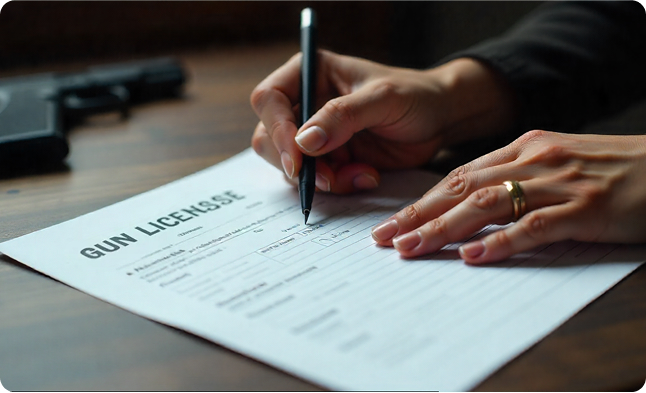
Pakistani women have equal rights to acquire an arms license under the law. But when it comes to reality, the hurdles are stacked higher.
At the arms licensing office, women are met with raised eyebrows, condescending questions, and bureaucratic holdups. “Why do you need a gun?” is a question asked not with curiosity, but suspicion. The process, legal though it is, is not geared towards female applicants.
Even licensed women gun owners keep their status a secret from neighbors or families, for fear of being judged, gossiped about, or morally policed. Stigma does its best work here, keeping not just women from defending themselves, but guilt-tripping them for even considering doing so.
Saucy twist: Can a woman be considered a feminist if she packs heat?
The answer is in the motivation. If a woman chooses a gun to feel safe, to protect herself in an uncivil society or a patriarchal-dominated one, or simply to assert her right to do so, that is not hypocrisy. That’s empowerment.
Self-defense does not require disguise. When in a society women are taught to fit in or avoid conflict, guns offer a third alternative: stand your ground.
It’s not about fear-mongering. It’s about building confidence, skill, and the courage to declare: I am not a victim.
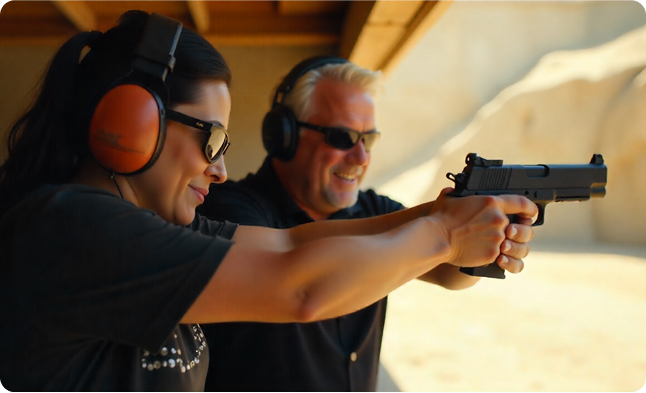
In cities like Karachi and Islamabad, women-owned gun schools are now mushrooming. Some even have ladies-only classes taught by professional instructors. From doctors to businesswomen, housewives to students, women of all backgrounds are going in nervous and emerging empowered.
Meet Ayesha*, a 27-year-old journalist from Karachi. After getting followed home one too many times late at night, she took a course in the use of firearms. “I don’t have a gun with me always,” she says. “But if I do have to use it, I know how. That makes all the difference.”
Or meet Farhat*, a 55-year-old Quetta widow. Following a break-in at her home, she applied for a shotgun license and received training at her neighborhood shooting range. “I waited too long for someone to come rescue me. Now I rescue myself.”
These are not gun enthusiasts. These are women who’ve reached their limit.
(*Names have been changed to protect privacy.)
To truly own their safety, Pakistan must do more than give them licenses on paper.
● Streamline the process of issuing licenses through gender-sensitive training and female counters who deal specifically with them.
● Promote public awareness campaigns that make it the new normal for women to learn self-defense, including firearms.
● Provide safe spaces (e.g., women-operated shooting ranges) where learning is not stigmatized but encouraged.
● Create mentorship programs pairing trained women with new students, community over solitude.
It’s not about creating a sharpshooter out of every woman. It’s about choice. About giving women the freedom to become more than simply guarded to guard.
Final Shots: Beyond the Barrel

Join the Bandook Wala community. Learn about safety, maintenance, and the latest regulations. Let’s share our passion for firearms responsibly.
Mon – Sat 12PM to 10PM
